✈️ The Era of Strict Carry-Ons: Why the 22 × 14 × 9 Rule Is Being Enforced in 2026

I’ll be honest.
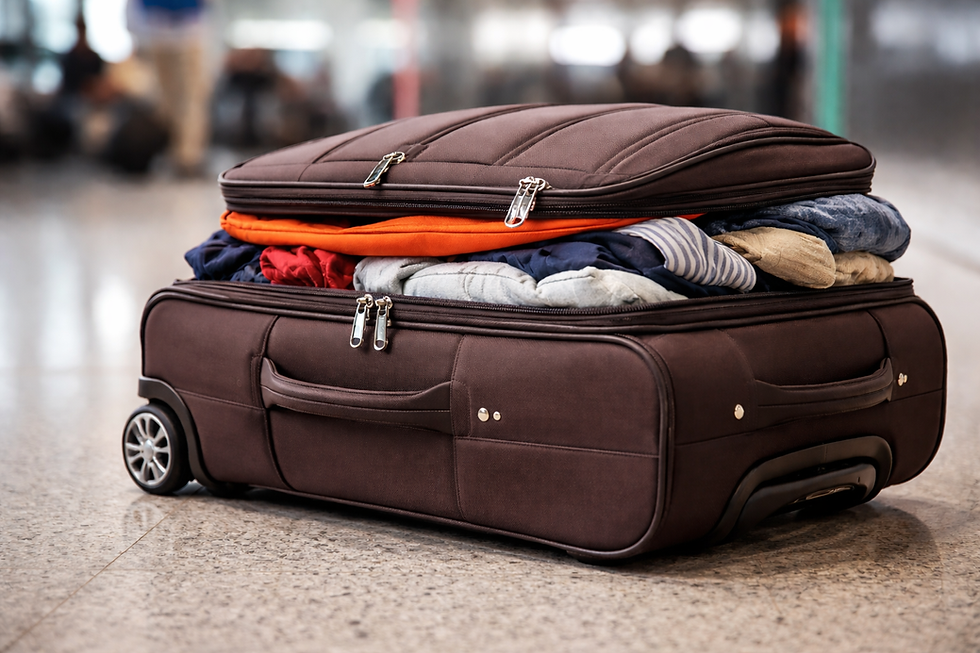
I’m an over-packer. Sidenote: A little shoutout to the man who always gives me half of his suitcase ( my husband) when I ALWAYS overpack mine.
I always think I can make it work. I’ve flown with the same carry-on for years. I’ve expanded the zipper to it's limits. I’ve stuffed my personal item halfway under the seat and rested my feet on it like it was an ottoman.
For a long time… that worked.
Not anymore.
In 2026, airlines haven’t dramatically changed their luggage size rules — but they have absolutely changed enforcement. And if you’re someone who likes to push the limit, it’s about to get tougher.
📏 The Real 22 × 14 × 9 Rule (Including Wheels and Handles)
Most major U.S. airlines still publish the standard carry-on limit:
22 × 14 × 9 inches
But here’s what travelers often misunderstand:
That measurement includes the entire exterior of the bag.
You must measure:
From the bottom of the wheels
To the very top of the fixed handle housing (not the extended handle)
Full width including side handles
Full depth including front pockets or expansion
If your bag does not easily drop into the sizer without force, it can be pulled and gate-checked.
There is no more cramming. No angling.No “it’s close enough.”
🧳 Airline Carry-On Rules in 2026
The following U.S. carriers maintain the 22 × 14 × 9 standard (including wheels and handles):
American Airlines
Delta Air Lines
United Airlines
JetBlue Airways
Alaska Airlines
Southwest Airlines allows a larger 24 × 16 × 10 inch carry-on.
Budget carriers like:
Spirit Airlines
Frontier Airlines
Allegiant Air
…often charge for carry-ons and strictly enforce dimensions. Personal item allowances are smaller and heavily monitored.
Gate-check fees typically range:
$35–$65 on major carriers
$75–$100 on budget airlines
⚠️ Important: Always check the specific airline’s website before you travel. Policies can vary by fare type (Basic Economy vs. standard), aircraft type, and route. Do not assume the rule is the same across every ticket.
🌍 Domestic vs. International Connections: Where Travelers Get Caught
Here’s where many travelers run into trouble:
You can be completely compliant on a U.S. domestic flight — and then transfer to an international carrier with entirely different regulations.
For example:
Your bag may meet Delta Air Lines domestic standards.
But when you connect onto Lufthansa in Europe or Emirates in Dubai, you may face:
Smaller dimension limits
Strict carry-on weight caps (often 15–22 lbs)
Stricter enforcement
Even if your ticket is booked on one itinerary, the operating carrier’s baggage rules often apply.
Bottom line: Check every airline involved in your journey — not just the first flight.
Pack to the stricter standard.
🎒 The Personal Item Crackdown: Under the Seat Means Fully Under the Seat
Typical personal item size: Around 17 × 10 × 9 inches
Here’s what’s changed:
Gone are the days of:
Stuffing it halfway under the seat
Letting it hang into your legroom
Resting your feet on top of it during takeoff
If your bag sticks out, crew may require it to be moved or checked.
Safety regulations require clear floor space for taxi, takeoff, and landing. On full flights, airlines are enforcing under-seat compliance much more strictly.
If it doesn’t fit completely under the seat — it’s not a personal item.
💼 What About Regular Checked Luggage?
Checked luggage enforcement is tightening as well.
Most U.S. airlines still allow:
50 pounds maximum weight
62 linear inches total
Linear inches means:Length + Width + Height combined must equal 62 inches or less.
And just like carry-ons, measurements must include:
From the bottom of the wheels
To the top of the handle housing
Including side handles and exterior pockets
If your checked bag exceeds:
50 lbs → overweight fee
62 linear inches → oversize fee
Fees can range from:
$100–$200+ for overweight
$150–$300+ for oversize
International carriers — particularly in Europe and Asia — often enforce weight and size limits more strictly than domestic U.S. flights.
Again: always verify each airline’s baggage policy before departure.
🤖 Why Enforcement Is Increasing
Airlines are dealing with:
Consistently full flights
Limited overhead bin space
Boarding delays caused by oversized bags
Stricter safety compliance
Some airports are testing automated luggage scanners that measure bags instantly. If your bag exceeds limits by even a small margin, it may be flagged without discretion.
There’s no negotiating with a machine.
😅 The Overpacker’s Reality Check
As someone who always tries to squeeze in one more outfit, here’s the truth:
2026 isn’t about new rules. It’s about enforcement.
Measure your luggage correctly:
✔ Bottom of wheels to top of handle
✔ Include every exterior inch
✔ Keep personal items fully under the seat
✔ Stay under 50 lbs for checked
✔ Check each airline on your itinerary
✔ Pack to the strictest regulation if connecting internationally
Because you can be compliant on one flight and out of compliance on the next.
Travel doesn’t have to be stressful — even with strict airline rules and strict carry-on enforcement. With a little planning, proper measurement, and smart packing, you can avoid fees, breeze through the gate, and make the most of every trip.
At Alleeways Travel, we help travelers like you navigate airline regulations, optimize luggage, and travel smarter — whether it’s a domestic getaway or an international adventure.
Of course, I'll always be honest... for an over-packer like me... I will always struggle but at least I know the rules.
Safe travels,
Nikol Allee
Founder, Alleeways Travel
📧 Email: nikol.allee@fora.travel
📞 Phone: +1-317-828-4950
🌐 Website: www.AlleewaysTravel.com


Comments