What Is a Safari? A Complete Guide to the Experience, Seasons, Pricing & Planning Your Trip

Updated: May 20
A safari is not just a vacation—it is a fully coordinated wildlife journey built around nature, expert guiding, and access to some of the most remote ecosystems on earth. The word safari comes from Swahili, meaning “journey,” and while its origins trace back to 19th-century expeditions, modern safaris are focused entirely on wildlife viewing, conservation, photography, and immersive travel experiences.
Today, a safari is less about where you stay and more about how you experience the wild.
Safari Is a Complete Travel Product
A safari is best understood as a fully integrated experience where everything works together seamlessly:
Wildlife viewing in iconic African landscapes
Expert guides and trackers interpreting every moment
Carefully selected lodges or luxury tented camps
Daily game drives in open safari vehicles
Seamless logistics including flights, transfers, and routing
All meals and most on-ground services included
This is not DIY travel—it is a curated system designed to place you in the right place at the right time without you managing the complexity.
Where Safaris Take Place
Most high-quality safaris focus on East and Southern Africa:
Serengeti National Park (Tanzania) – Endless plains and the Great Migration
Masai Mara National Reserve (Kenya) – Big cats and dramatic river crossings
Kruger National Park (South Africa) – One of Africa’s most accessible Big Five regions (Lion, Leopard, Elephant, Rhinoceros, African Buffalo)
Okavango Delta (Botswana) – Unique water-based safari ecosystem
Bwindi Impenetrable National Park (Uganda) – Mountain gorilla trekking
Volcanoes National Park (Rwanda) – Premium gorilla trekking experience
Uganda and Rwanda are especially known for gorilla trekking—hiking through dense rainforest to observe endangered mountain gorillas in their natural habitat.
Types of Safari Experiences
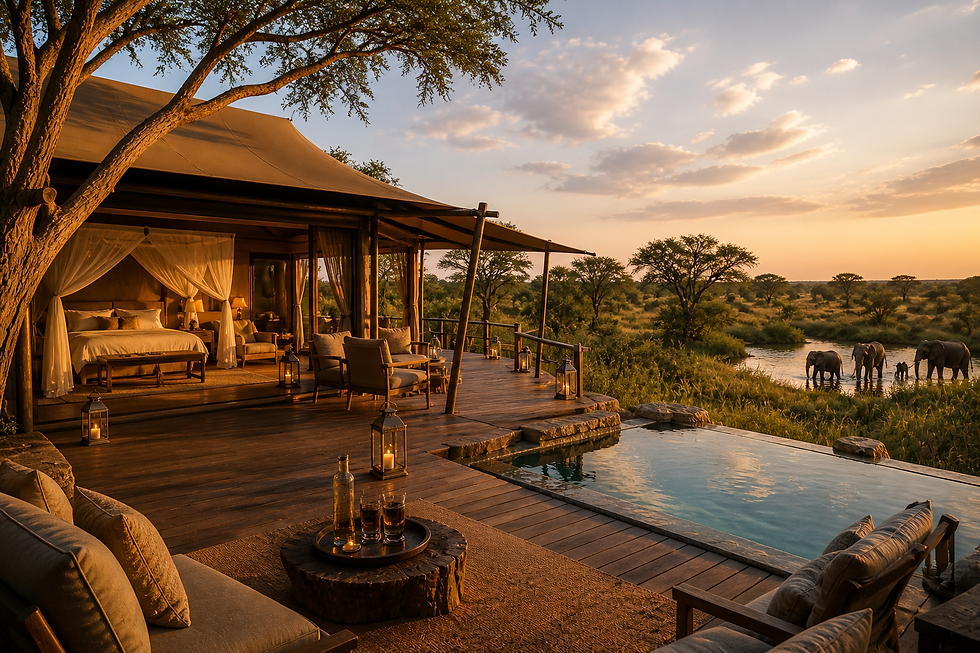
Lodge-based safaris (classic game drives)
Mobile camps (following wildlife movements)
Walking safaris (on-foot guided tracking)
Water safaris (canoe and boat-based systems)
Gorilla trekking add-ons (Uganda & Rwanda)
Specialty experiences (balloon safaris, photography, horseback safaris)
Private Reserves vs National Parks
Private Reserves
Limited vehicles and exclusive access
Off-road driving (where permitted)
Night drives allowed
More flexible and intimate sightings
National Parks
Open access to many operators
Must stay on designated roads
No night driving
Can be busier at popular sightings
What a Typical Safari Day Looks Like
Early Morning (5:00–9:00 AM)
Sunrise game drives
Coffee stops in the bush
Peak predator activity
Midday Rest
Animals rest in heat
Guests relax at camp (some camps will have pool, spa, fitness rooms, etc...)
Afternoon & Evening (4:00–8:00 PM)
Second game drive
Sundowner experience
Dinner under the stars
What Is a Sundowner?
A sundowner is a safari tradition where your guide stops in a scenic location during the late afternoon drive to watch the sunset. Drinks and light snacks are served from the vehicle while you take in the changing sky over the bush.
It is one of the most iconic and memorable moments of any safari.
Seasons & When to Go
Dry Season (June – October)
Wildlife concentrates around water
Easier animal visibility
High predator activity
Best for: Big Five safaris, photography, first-time travelers
Green Season (November – May)
Lush green landscapes
Fewer crowds and vehicles
Excellent birding and newborn animals
Best for: photography, value travel, quieter experience
Important Regional Notes
East Africa migration peaks: July–October
Southern Africa peak wildlife: June–October
Gorilla trekking (Uganda & Rwanda): year-round, easier in drier months
Some regions in South Africa are malaria-free, which can be important for families or certain traveler
Safari Pricing & Experience Levels: What Actually Changes
Safari pricing is driven by exclusivity, guiding quality, access, and flexibility—not basic comfort.
Mid-Tier Safari
Comfortable lodges or tented camps
Private en-suite bathrooms in some more basic camps may have shared facilities
Shared or small-group game drives
Professional guides
National parks or public reserves
More vehicles at sightings
Structured schedule
High-End Safari
Stylish, design-focused camps
Private en-suite bathrooms standard
Lower guest density
Strong guiding teams with trackers
Access to private conservancies
Fewer vehicles at sightings
More flexibility and personalization
Luxury Safari
Ultra-private camps or suites
Highly personalized service
Very low guest density
Private vehicle often included
Access to exclusive off-road wildlife areas (where permitted)
Elite guiding and storytelling
Fully flexible schedule
The Real Difference Across All Levels
Exclusivity – number of vehicles at sightings
Guiding quality – depth of interpretation and tracking skill
Access – national parks vs private conservancies
Flexibility – structured vs personalized experience
Service level – standard hospitality vs curated experience
Important: Hidden or Unexpected Safari Costs
Additional costs can include:
Park fees and conservation charges
Internal flights between safari regions
Transfers between camps and airstrips
Charter flights for remote areas
Gratuities for guides and staff
Premium drinks or special requests
Optional experiences (balloon safaris, walking safaris, private vehicles)
Travel insurance and visas
Family Travel & Safari Behavior Expectations
Safaris can be incredible for families, but there are a few important considerations:
Many camps have minimum age requirements for children, especially in walking safaris or certain luxury properties
Game drives require guests to be calm, quiet, and patient to avoid disturbing wildlife and to ensure safety and best viewing opportunities
Animals are wild and unpredictable, so listening carefully to guide instructions is essential
For families traveling together, private vehicle arrangements are often highly
recommended.
This allows:
More flexibility with timing and breaks
Freedom to adjust pace for children
A more comfortable and private experience
Less concern about disturbing other guests
Private guiding also allows families to tailor the safari day around their needs while still maximizing wildlife viewing.
Final Thought
A safari is not a hotel stay with animals nearby—it is a carefully designed journey into some of the last truly wild places on earth.
The experience depends on:
Season
Location
Guiding
Access level
And thoughtful planning
When done right, it becomes one of the most meaningful and unforgettable travel experiences in the world.
Let’s Plan Your Safari
I help clients design fully customized safari experiences including:
Best season selection
Best geographic location based on travel style and interests
Ideal accommodations and lodge style
Types of transport between locations (vehicle, boat, light aircraft)
Trip length and pacing
Best safari regions for specific wildlife
Gorilla trekking in Uganda and Rwanda
Side trips like wine country, Cape Town, or Indian Ocean beaches
Malaria-free safari options when preferred
Family-friendly planning and private vehicle recommendations
If you’re ready to plan your safari or want help figuring out the best time, place, and experience for you, reach out:
Nikol Allee
Alleeways Travel
📞 +1-317-828-4950


Comments